Review: First Holy Communion 3D Paper Cut SVG for Embroidery
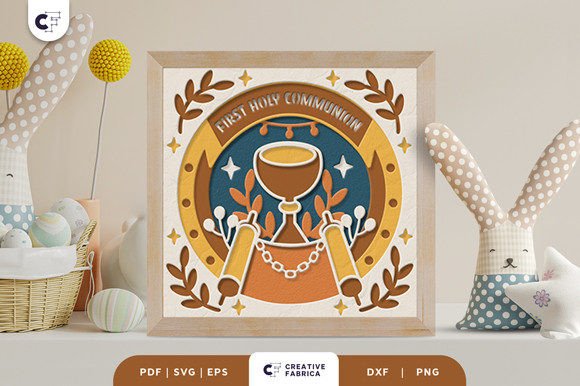
As a designer who spends most of my day staring at stitch maps and digitizing software, I approach every new machine embroidery design with a healthy dose of skepticism. We have all downloaded files that look stunning on a screen but turn into a bird's nest of thread breaks and puckering on the hoop. Recently, I got my hands on the First Holy Communion 3D Paper Cut SVG. At first glance, the title threw me off; this is clearly marketed as a layered paper cutting template for shadow boxes. However, in our line of work, versatility is currency. The real question isn't just whether it works for paper, but how this specific aesthetic translates when applied to fabric using an embroidery file workflow.
The Aesthetic: Sacred Simplicity Meets Modern Depth
The first thing that strikes you about this design is its mood. It captures the solemnity and joy of First Communion without relying on the overly clip-art style graphics we often see in religious holiday embroidery. The "3D" aspect refers to the layered depth typical of paper crafts, featuring distinct planes that create a sense of dimension. For an embroiderer, this visual language suggests a design rich in potential for texture play. The layout is square, which immediately makes me think of framed art, pillow covers, or perhaps a centered chest logo on a structured garment.
The visual personality is clean and reverent. It avoids excessive clutter, which is crucial when working with sacred themes. When I imagine this stitched out, I see an opportunity to use varying thread colors to mimic the shadow effects intended for paper. Instead of physical layers of cardstock, we can achieve depth through satin stitch borders against matte fill stitch backgrounds, or even by incorporating actual fabric layers if we adapt it into an applique design.
Real-World Application: The Boutique Sweatshirt Scenario
To truly test the viability of this asset, I imagined a specific client request. A local boutique owner wanted a limited run of commemorative sweatshirts for a parish group celebrating the sacrament. They needed something that felt modern yet traditional, suitable for a personalized gift that wouldn't look out of place worn to church or a family dinner.
In this scenario, the First Holy Communion 3D Paper Cut SVG shines as a concept for sweatshirt embroidery. The square format fits perfectly on the front yoke of a heavy cotton blend fleece. Because the design relies on defined shapes rather than ultra-fine details, it holds up well on textured fabrics. If I were executing this, I would likely simplify the deepest layers into solid blocks of color to prevent the design from becoming too dense. The result would be a finished product that looks high-end and custom-digitized, rather than a generic store-bought transfer.
This same logic applies to other custom apparel items. Imagine this design on a canvas tote bag design for carrying mass books or prayer journals. The structural nature of the original paper-cut style complements the stiffness of canvas beautifully. For a baby embroidery project, like a christening gown pillow or a nursery wall hanging, the softness of the theme translates well, provided the stitch count is managed correctly for delicate fabrics.
Technical Considerations and Fabric Challenges
Here is where we need to be realistic. This file originates as a vector for paper, not necessarily a pre-digitized digital embroidery file ready for your machine. If you are purchasing this to use directly in embroidery software, you must be prepared to do some legwork. Converting a complex layered SVG into stitches requires careful attention to stitch density.
If you attempt to stitch every single layer of the original paper design using standard fill stitches, you risk creating a cardboard-like stiffness on your fabric. This is particularly dangerous on stretchy materials or curved surfaces like caps. For a cap or hat, the multi-layered approach might cause registration issues due to the curvature of the buckram. In such cases, I would recommend flattening the design in your software, keeping only the essential outlines and using underlay stitches strategically to ensure stability.
Dark fabrics present another challenge. The original design likely assumes a white or light background to show off the "cut" layers. If you are stitching this onto a navy blue blazer or a black tote, you must ensure there is a sufficient background layer or border included in your digitization. Without it, the negative space intended for the paper layers will simply disappear into the fabric, ruining the 3D illusion. Always test your embroidery project on scrap fabric of the same weight and color before committing to the final piece.
Stabilizer and Hoop Selection
Given the potentially dense nature of mimicking 3D depth, choosing the right stabilizer is non-negotiable. For woven fabrics like linen or cotton twill, a medium-weight cut-away stabilizer is usually my go-to to prevent distortion over time. If you are working on a kitchen towel or tea towel that will be washed frequently, the stability of the stitches is paramount. A tear-away might leave the design too floppy, leading to premature wear on the satin columns.
Regarding hoop size, since the template is square, ensure your machine can accommodate the dimensions without re-hooping. Re-hooping introduces alignment errors that can destroy the precise layering effect this design relies on. If the design is large, consider breaking it into sections only if your software allows for perfect registration, though a single large hoop is always preferable for seamless results.
Commercial Value and Brand Consistency
For Etsy sellers and craft business owners, the appeal of this design lies in its uniqueness. The market is flooded with standard crosses and chalices. Offering a product that utilizes a "paper cut" aesthetic via embroidery sets your small shop product apart. It signals to the customer that thought went into the design selection.
However, before listing this as a commercial embroidery asset or selling finished goods, you must verify the licensing terms. The description mentions receiving a template, but it does not explicitly state commercial rights for physical goods versus digital resale. Never assume a license covers everything. Check if you are allowed to sell the stitched handmade product or if the license restricts you to personal use only. This due diligence protects your brand reputation and ensures customer trust.
Furthermore, consider how this design affects your brand consistency. If your shop specializes in whimsical, colorful kids' items, this solemn, structured design might feel out of place unless marketed specifically as a premium sacrament collection. On the other hand, for a brand focused on heirloom quality and tradition, it is a perfect fit.
Final Verdict for the Practical Designer
The First Holy Communion 3D Paper Cut SVG is a compelling resource, but it demands a designer's touch to reach its full potential in embroidery. It is not a "load and stitch" solution for every machine without prior inspection. Its strength lies in its modern interpretation of a traditional event, offering a fresh look for personalized gifts and boutique merchandise.
My advice is to treat this as a raw material rather than a finished recipe. Use it to inspire a unique embroidered patch, a sophisticated pillow cover, or a standout piece of custom apparel. Test your thread contrasts rigorously; sometimes a monochromatic scheme works better to emphasize the shadows than a rainbow of colors. Check the small details and tiny lettering—if the original SVG has fine text, you may need to enlarge it or remove it entirely to maintain stitch clarity.
Ultimately, this design bridges the gap between papercraft artistry and textile decoration. With the right stabilizer, thoughtful digitizing adjustments, and a clear understanding of your fabric constraints, it can elevate a standard communion gift into a cherished keepsake. Just remember to verify those license terms and run your test stitches. That is the difference between a hobbyist guess and a professional result.